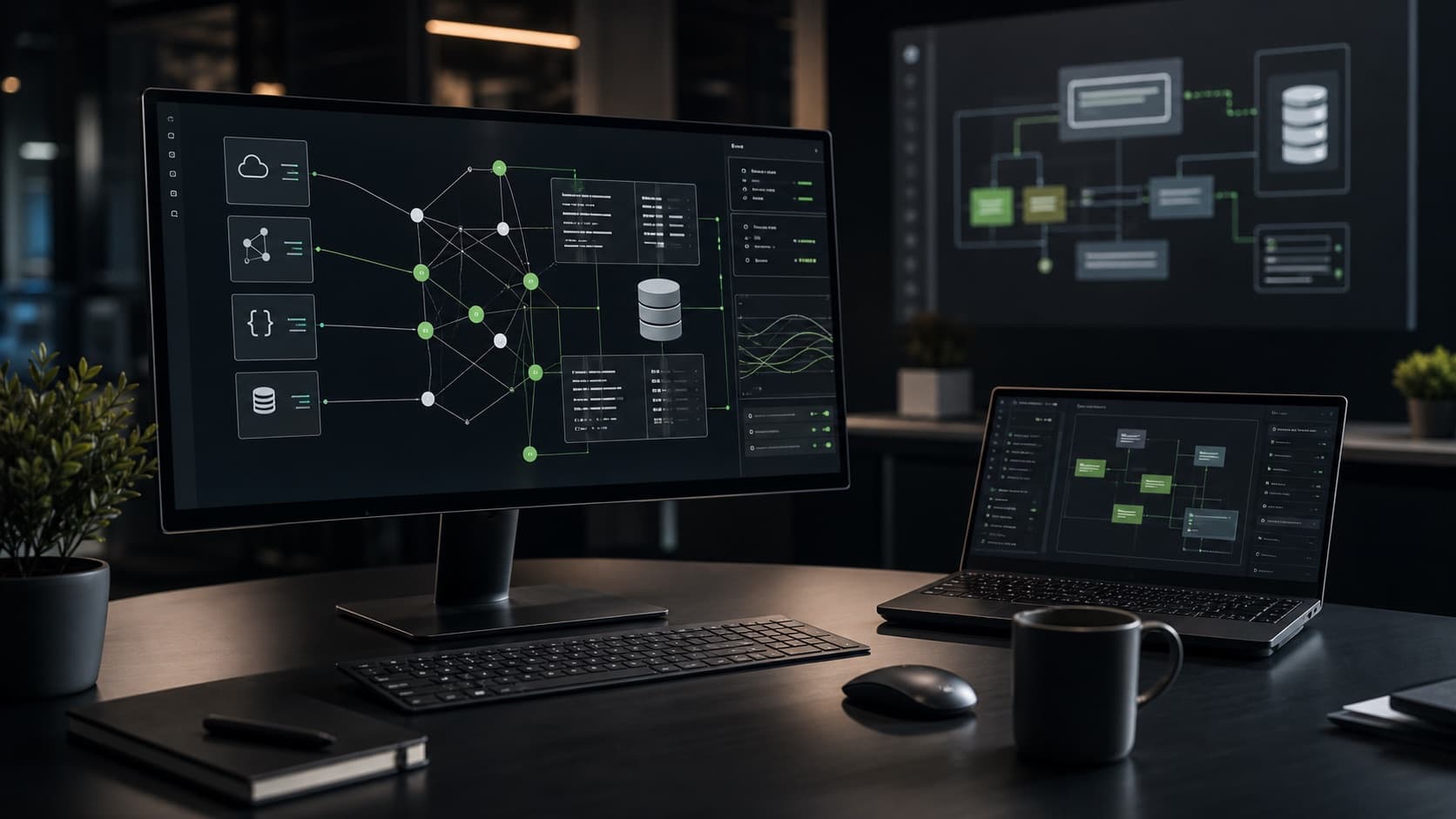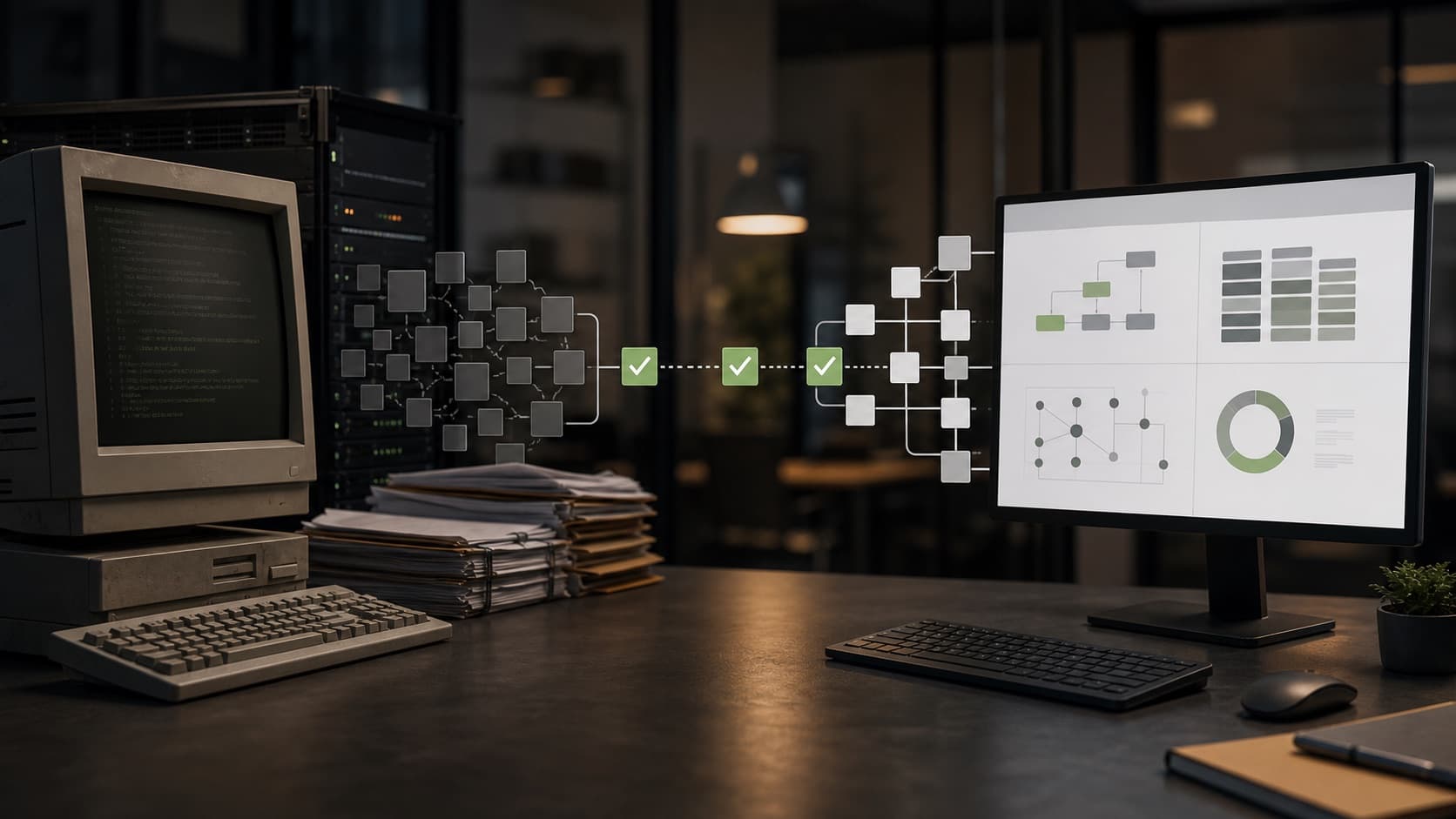

An AI prototype can look like a finished product after only a few days. The interface looks clean, the demo works, the first screens are impressive. That is the strength of modern AI tools: they shorten the path from idea to something visible.
In our work as a software agency, we increasingly see the next phase: companies come to us with a self-built AI prototype and want to turn it into a reliable product. At first glance, a lot already looks finished. But once we inspect code, data model, authentication, failure modes and operations, a different picture appears: the surface has come far, but the product is not production-ready yet.
That is not a criticism of prototyping. AI prototyping is valuable. It helps teams test ideas faster, align stakeholders and make product decisions tangible. It only becomes risky when a demo state is mistaken for real software.
Why AI prototypes feel so convincing
AI tools are very good at creating visible product elements quickly:
- landing pages
- dashboards
- forms
- tables
- first app screens
- sample workflows
- UI components
- demo data
For early product phases, this is powerful. A team can see within days whether an idea works visually. It can collect user feedback, show something to investors or speed up internal decisions.
The issue is that many critical properties of production software are invisible in a demo.
A demo has to impress. Production has to work reliably every day.
Where the problems show up
Typical weaknesses of AI-generated products rarely appear in the first screenshot. They appear when real users, real data and real processes enter the system.
Common problems include:
- data models do not match the business process
- roles and permissions are implemented only superficially
- authentication works on the happy path but is not secure enough for real usage
- validation is missing or exists only in the frontend
- error states are not handled properly
- API contracts are inconsistent
- data is stored twice or contradicts itself
- tests are missing
- components are difficult to maintain
- security and privacy questions were not decided consciously
- deployment, logging, monitoring and backups are unclear
This may sound harsh at first. But it is logical: AI tools are heavily optimized for visible progress. They can generate a lot of code, but they do not automatically know which business rules, risks and operational requirements actually matter.
The difference between prototype and product
A prototype answers questions such as:
- Do users understand the idea?
- Is the workflow basically useful?
- Does the interface feel right?
- Is there interest in the product?
- Which features are actually important?
A production-ready system has to answer different questions:
- Is data secure and consistent?
- Do roles, permissions and tenants work correctly?
- What happens with invalid input?
- What happens when an integration fails?
- Can changes be released safely?
- Are critical workflows covered by tests?
- Will the code still be maintainable in six months?
- Can new developers take over the system?
- Are monitoring, logs, backups and recovery defined?
Both phases matter. The danger starts when they are mixed up. A prototype is allowed to be unfinished. A product used by customers, processing data or controlling business processes is not.
Why AI without engineering experience becomes risky
AI can write code, recognize patterns and suggest solutions. What it does not automatically replace is engineering judgment.
Experienced developers do not only check whether a feature appears to work. They check:
- whether the architecture fits expected growth
- whether data flows are traceable and secure
- whether permissions are enforced server-side
- whether failure modes are controlled
- whether tests cover important risks
- whether external dependencies were chosen consciously
- whether future extensions remain realistic
- whether operations and maintenance remain affordable
This is where a good AI prototype separates from production-ready software development. AI is not the problem. Unreviewed AI output is the problem.
Good UI is not product maturity
Modern AI tools often create very good interfaces. That creates a psychological effect: if something looks professional, it feels almost finished.
For software, that can be dangerous. The most expensive problems often live below the surface:
- weak data modelling
- unclear business logic
- missing transactions
- fragile integrations
- poor performance with real data volume
- insecure admin functionality
- missing audit logs
- platform decisions that are hard to migrate away from
A beautiful dashboard can still show wrong numbers. A modern form can still store unsafe data. An app can feel fast in a demo and become unstable under real load.
That is why we do not evaluate AI products only by their screens. We check whether the system is reliable from a domain, technical and operational perspective.
How we take over AI projects professionally
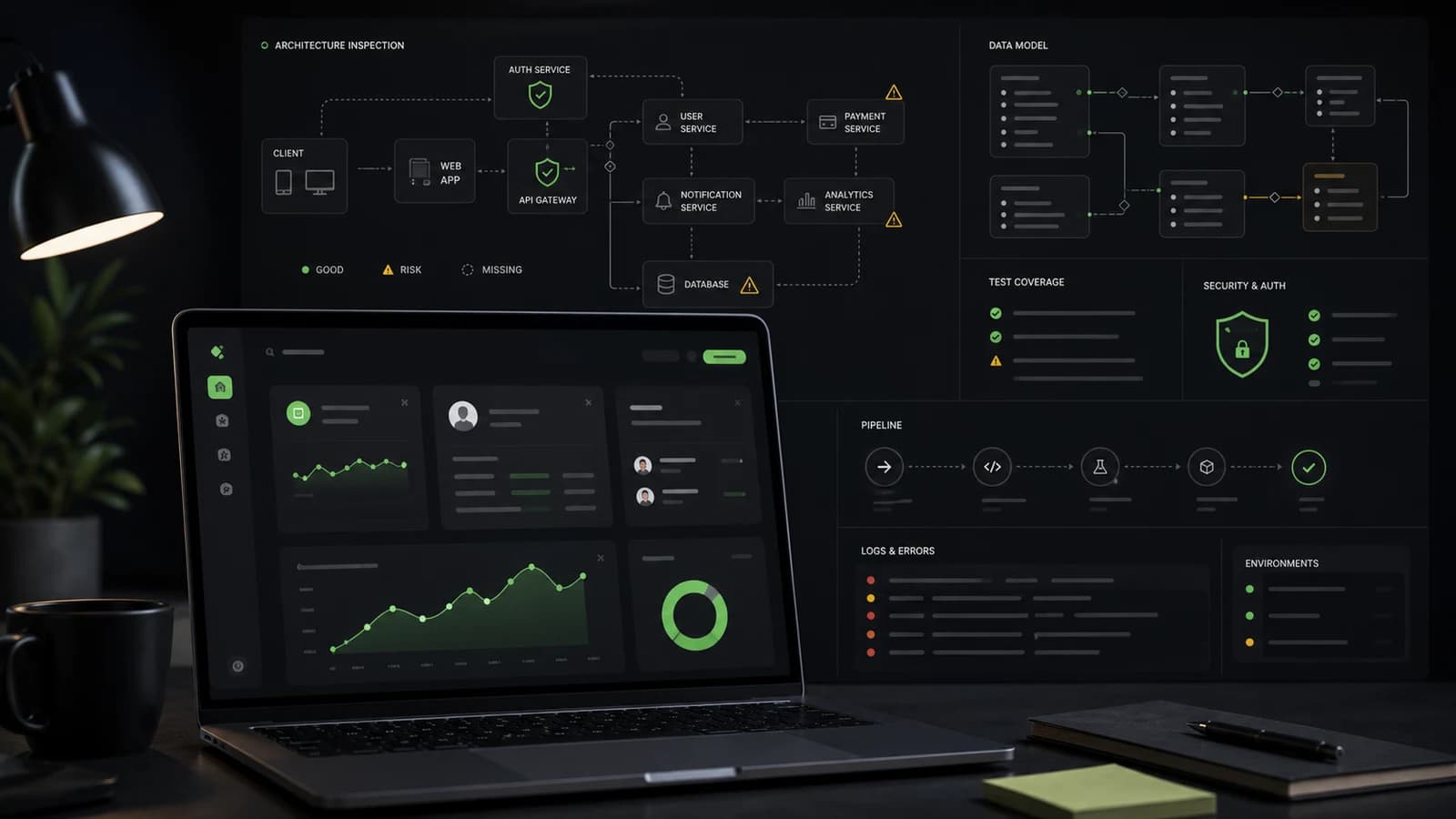
When a company comes to us with an AI prototype, the most important question is not: "Can we finish this?" The better question is: "Which parts are reliable, which parts need rework and which parts should be redesigned?"
A professional entry point usually looks like this:
- Product understanding: What should the system actually do, for whom and with which business risk?
- Code and architecture review: What structure exists, which dependencies matter and where are the risks?
- Data model review: Are entities, relationships, permissions and workflows represented correctly?
- Security and privacy check: Which data is processed, where is it stored and who can do what?
- Testing and quality analysis: Are there tests, reproducible builds and clear acceptance criteria?
- Operations check: Deployment, monitoring, logging, backups, debugging and maintenance.
- Decision: rescue, refactor, stabilize step by step or rebuild cleanly.
Not every prototype has to be thrown away. Sometimes the UI is useful, but the backend needs to be restructured. Sometimes the process is good, but the data model is wrong. Sometimes a rebuild is cheaper than months of repair.
An honest analysis saves money later.
How AI should be used
We use AI heavily in development ourselves. But not as a replacement for accountability. We use it as an accelerator inside a controlled process.
Useful AI work in professional projects includes:
- structuring requirements
- comparing technical options
- understanding codebases faster
- preparing tests and edge cases
- accelerating repeatable implementation work
- improving documentation and pull request descriptions
- preparing refactorings
- making risks visible
The difference is the frame. AI works well when tasks are clear, boundaries are defined and results are reviewed. Without architecture, review and tests, AI mostly produces speed. With engineering experience, it produces real progress.
That is especially true for AI integration, AI agents and production web or backend systems.
When an AI prototype is a good start
An AI prototype is valuable when it is clear what it was built for:
- visualizing an idea
- collecting first user feedback
- preparing an investment decision
- testing a workflow
- speeding up internal alignment
- roughly checking technical feasibility
It becomes problematic when it is taken directly toward production without technical assessment.
The right question is not: "AI or traditional development?" The right question is: "Which parts can we accelerate with AI, and which parts need experienced developers to decide deliberately?"
What companies should check before continuing an AI prototype
Before moving toward production, these questions help:
- Which data does the product process?
- Which features are business-critical?
- Where must permissions be enforced server-side?
- Which failure modes can cause real damage?
- Is there a traceable data model?
- Are there tests for core workflows?
- How is the product deployed?
- Who monitors errors?
- How are backups and recovery tested?
- Is the code maintainable or only generated?
- Which parts are consciously prototype and which should remain long-term?
If these questions are unanswered, that is not a failure. It is the moment where a demo becomes a professional software project.
Conclusion
AI development is the future. Not because AI replaces experienced developers, but because good developers can analyze, build, test and improve faster with AI.
The difference between an impressive AI prototype and production-ready software is experience: architecture, data, security, tests, operations and maintainability. If those topics are ignored, teams get something visible quickly. If they are taken seriously, they get a product that works in daily use.
If you started with an AI prototype and now want to understand whether it can become a reliable product, a technical review is often the right next step. Through our contact page, we can assess together whether stabilization, refactoring or a clean rebuild is the right path.