An operational fleet platform for the mid-market
Project description
For a mid-sized company with its own vehicle fleet we developed a fleet platform that helps fleet teams manage vehicles, drivers, maintenance, telematics data and operating costs in one place. The starting point was typical for fleets between 20 and 500 vehicles: live positions in one telematics portal, fuel-card invoices in another system, maintenance dates in spreadsheets and vehicle files spread across documents, emails and team knowledge.
The product brings these separate work areas into one web app. In daily operations the platform does not only answer where a vehicle is. It shows whether the vehicle is ready for use, who drives it, which costs look unusual, which maintenance tasks are due and which events need a decision now.
Target state
The business goal was a central control surface that saves fleet managers time in coordination and data reconciliation. Costs, utilization and availability needed to be connected so decisions no longer had to be reconstructed from separate exports.
The user goal was a calm start to the working day. A fleet manager should see active vehicles, exceptions and planned tasks at a glance. The map, activity feed and vehicle records were therefore designed as different perspectives on the same operational situation.
Challenges
The core complexity was the business logic behind vehicle status. A vehicle can be active, on standby, in maintenance, critical or outside a geofence, and these signals can arrive from different sources at different speeds. The product needed stable states that stay understandable even when raw telematics data is delayed or incomplete.
The cost logic also required structure. A fuel-card transaction is only useful when it can be connected to a vehicle, driver, time period and budget context. The app had to show not only amounts, but deviations, ownership and what needs to be checked.
Implementation
We designed the product around the fleet manager's day. The dashboard brings together active vehicles, kilometers, running costs, open maintenance and recent events. Every metric leads into a concrete operational context.
Dashboard, map, vehicle detail, maintenance planning and cost module all use the same underlying data model. Vehicle states, event types, cost items and maintenance due dates are reusable concepts, which prevents contradictory views and leaves room for future modules.
Outcome
the platform turns fleet work into a controlled process: monitor vehicles, understand exceptions, plan maintenance, analyze costs and keep records in one place. Instead of reacting when something fails, teams can identify operational issues earlier.
The platform creates a foundation for further product stages such as charging infrastructure, insurance workflows, workshop partners, additional telematics providers and advanced reporting.
Product views
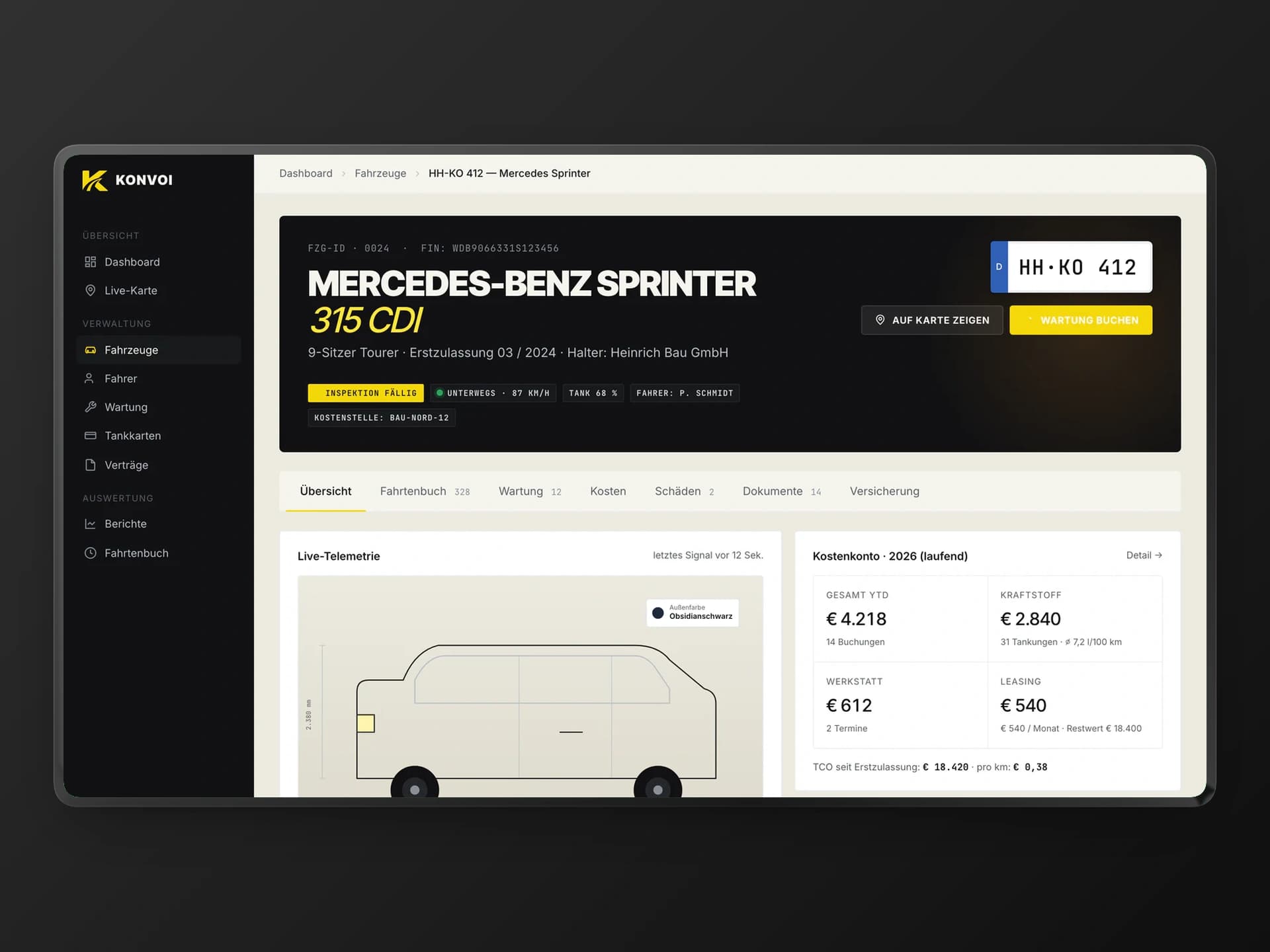
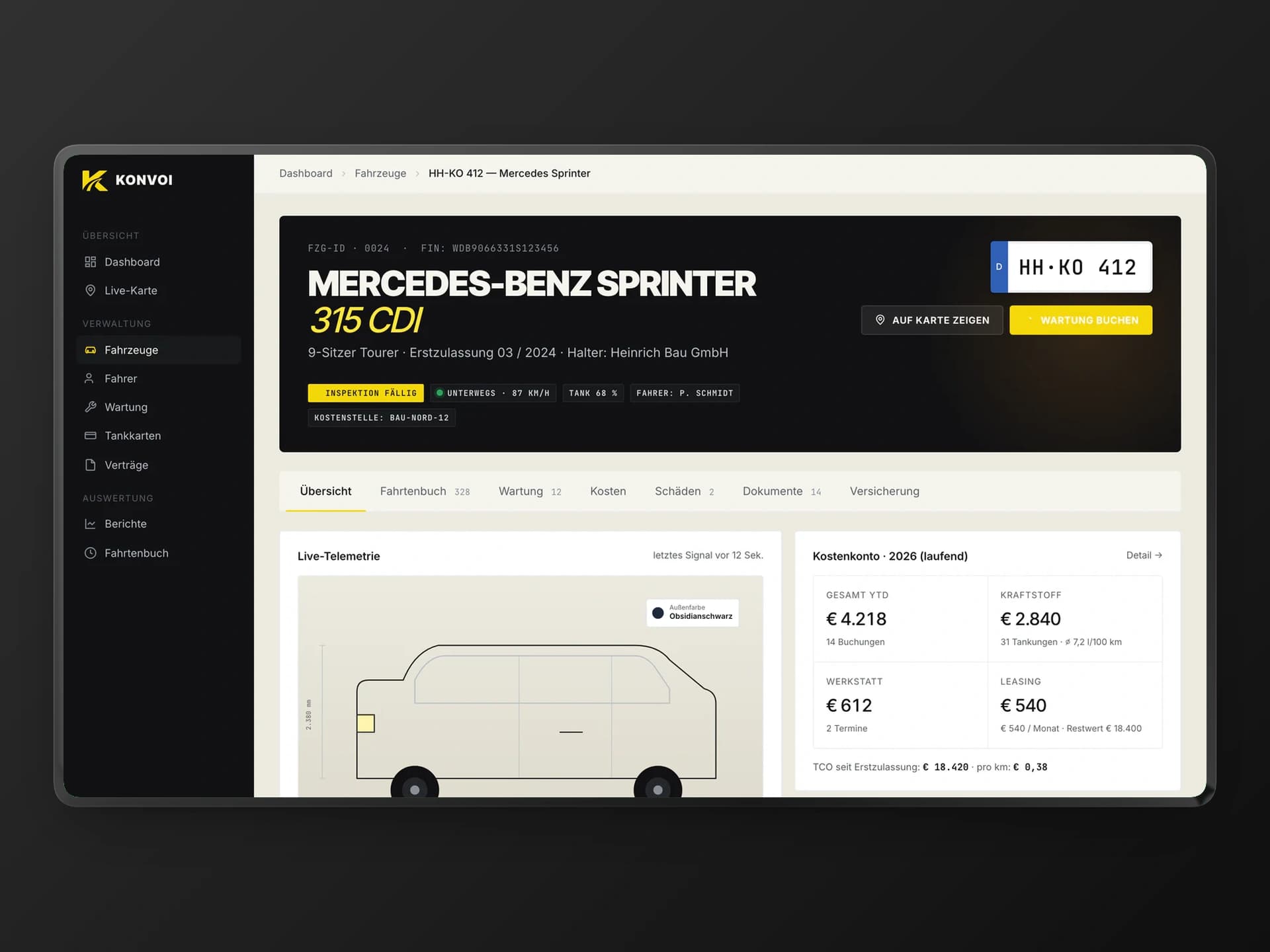
Vehicle detail
Single-vehicle view for master data, maintenance, driver, consumption, documents and activity.
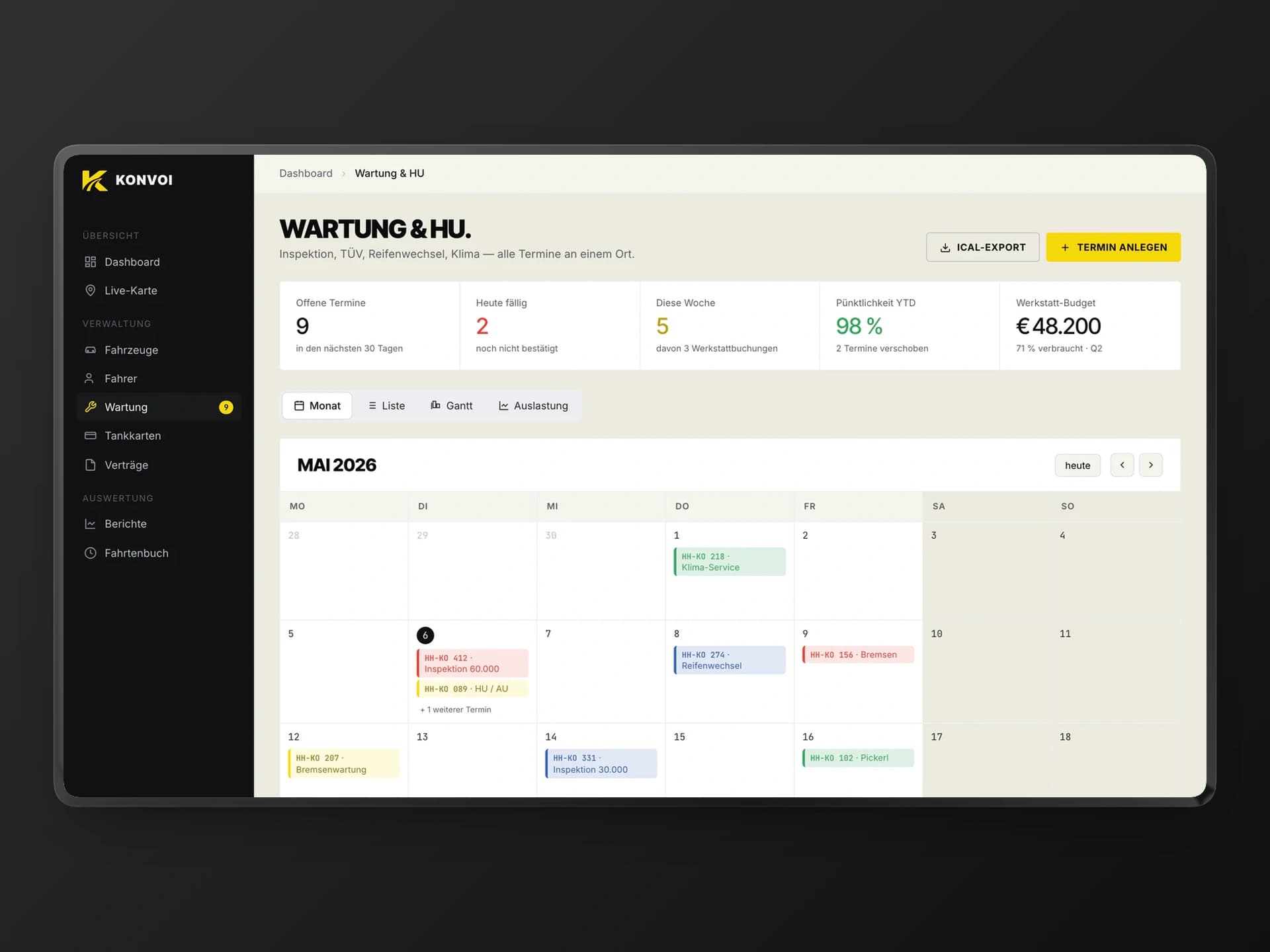
Maintenance
Planning for inspections, workshop appointments, due dates and technical control processes.